
Q1 Crypto Market Recap: Summary of Key Developments in 11 Top Projects

Original Title: "Q1 Superstar Project Pile-Up TGE? A Quick Look at 11 Major Project Updates"
Original Author: Nan Zhi, Odaily Star Daily
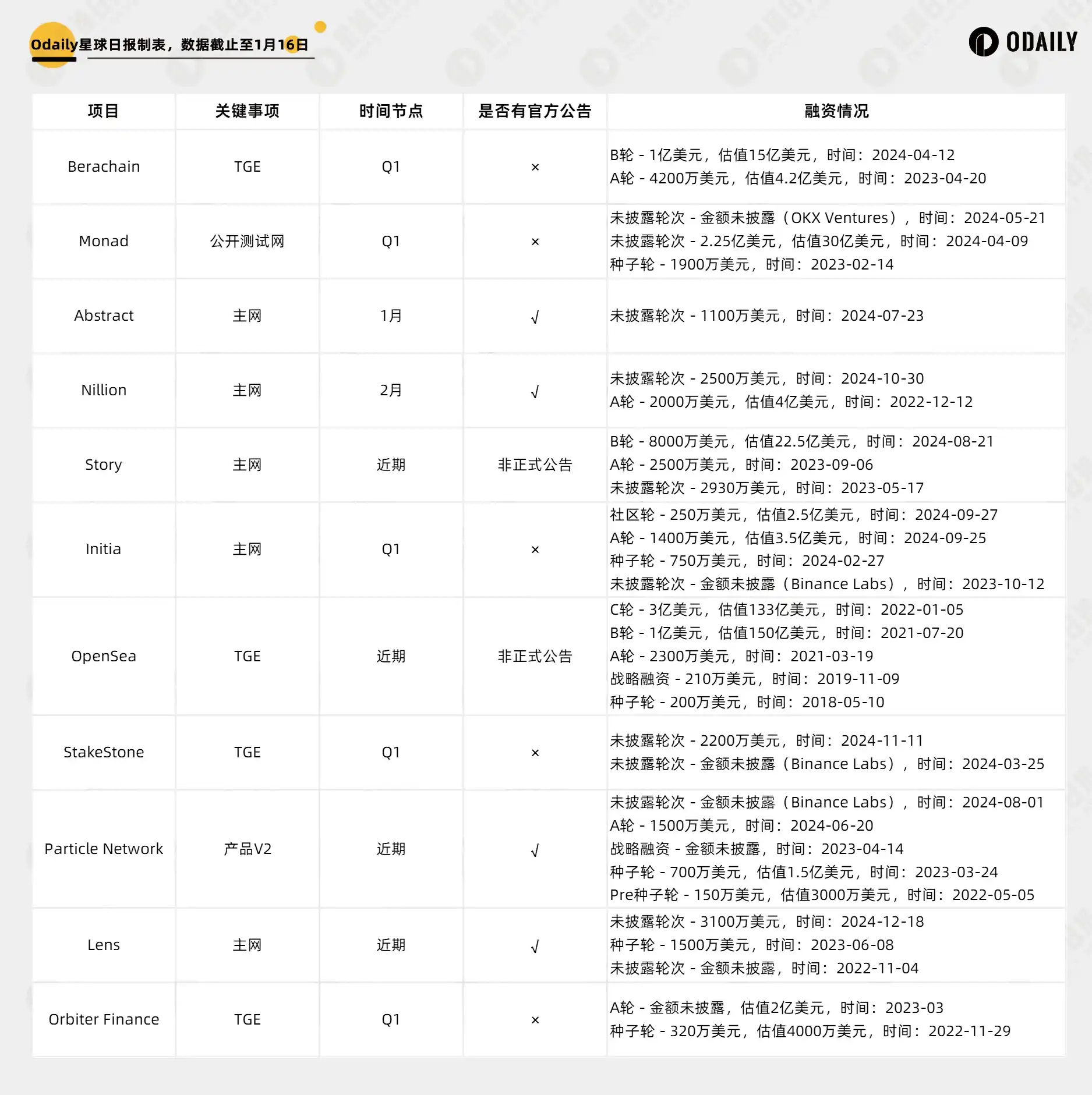
According to @layerggofficial's statistics and disclosure, there will be dozens of projects conducting TGEs or launching mainnets in the first quarter of 2025, including top-tier projects such as Berachain, Linea, OpenSea, and more.
However, through Odaily's investigation, most of the projects disclosed have not actually received official endorsements for their TGE/mainnet schedules. Many are merely community rumors or even lack any relevant information.
So, which key projects have explicitly or implicitly hinted at upcoming launches? What recent important updates or participation opportunities do these projects have? Odaily will review and summarize these in this article.
Berachain
· Launch Time: Potentially in Q1 2025, but no official announcement has been made.

· Funding Amount: Series B - $1 billion, valuation at $15 billion; Series A - $42 million, valuation at $4.2 billion.
· Recent Developments: Conducted pre-deposit activities with multiple projects and offered early rewards, including Ethena, StakeStone, etc. As of January 8th, the total deposit amount reached $1 billion.
Monad
· Launch Time: Rumored to release a public testnet in Q1, with no official announcement yet.
· Funding Amount: Undisclosed Round - Undisclosed Amount (OKX Ventures); Undisclosed Round - $225 million, valuation at $30 billion; Seed Round - $19 million.
· Recent Developments: Started rolling out the testnet in November in phases, established the Monad Foundation on December 17th. Early January series of articles hinted at an upcoming event.
Abstract
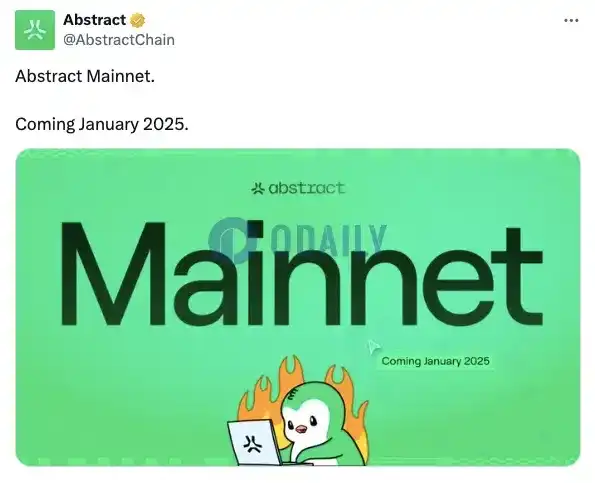
· Launch Time: Official announcement states the mainnet will go live in January 2025
· Funding Amount: Undisclosed Round - $11 Million.
· Recent Developments: Participants can now engage in social media tasks, NFT minting, testnet interactions, etc. See "How to Participate in the Abstract Airdrop Closely Related to Fat Penguin?" "Fat Penguin's Coin Launch Drives NFT Boom, How PENGU, Abstract, OpenSea Benefit All?" for more details.
Nillion
· Launch Date: Officially announced to launch the mainnet in February 2025.
· Funding Amount: Undisclosed Round - $25 Million; Series A - $20 Million, Valuation $4 Billion.
· Recent Developments: Participants can engage in staking and validator node interactions. See "Interactive Guide: Nillion, the 'Global Blind Computer,' Raises Another $25 Million" for more information. Collaborating with numerous AI projects, including Build On Nillion, Thales_ai, Four Pillars, etc.
Story
· Launch Date: Official hints suggest the mainnet will launch soon.
· Funding Amount: Series B - $80 Million, Valuation $22.5 Billion; Series A - $25 Million; Undisclosed Round - $29.3 Million.
· Recent Developments: Launched a joint task with Binance Wallet lasting three weeks with token rewards. Other interactions include testnet airdrops, ecosystem project check-ins, NFT purchases, etc. Readers can find detailed operation guides on social media.
Initia
· Launch Date: Rumored to launch the mainnet in Q1, with no official announcement. The latest official mainnet progress update was released on December 19, 24, stating 78% progress and undergoing security audits.
· Funding Amount: Community Round - $2.5 Million, Valuation $2.5 Billion; Series A - $14 Million, Valuation $3.5 Billion; Seed Round - $7.5 Million; Undisclosed Round - Undisclosed Amount (Binance Labs).
· Recent Developments: Current testnet activities are still ongoing, including XP, Swap, Sake, and VIP modules. Readers can find detailed operation guides on social media.
OpenSea
· Launch Date: To be confirmed
· Funding Amount: Series C - $3 billion, valuation $13.3 billion; Series B - $1 billion, valuation $15 billion; Series A - $23 million; Strategic Funding - $2.1 million; Seed Round - $2 million.
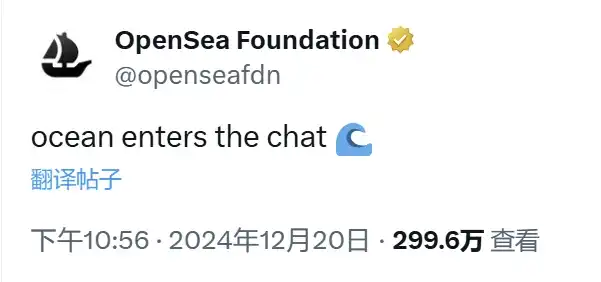
· Recent Developments: On December 20, the OpenSea Foundation's official Twitter account went live and posted its first tweet "ocean enters the chat." On December 28, an OpenSea Foundation spokesperson responded to token issuance rumors: "More information coming soon," but no further information has been provided since then.
StakeStone
· Launch Date: Rumored to be in Q1 TGE. StakeStone officially responded to Layergg's launch schedule form.
· Funding Amount: Undisclosed Round - $22 million; Undisclosed Round - Undisclosed amount (Binance Labs).
· Recent Developments: Partnered with Berachain to launch the beraSTONE staking event, emphasizing that participants will receive STO (StakeStone Token) rewards.
Particle Network
· Launch Date: Product is already live, and V2 is expected to be released soon, with no official TGE announcement yet.
· Funding Amount: Undisclosed Round - Undisclosed amount (Binance Labs); Series A - $15 million; Strategic Funding - Undisclosed amount; Seed Round - $7 million, valuation $1.5 billion; Pre-Seed Round - $1.5 million, valuation $30 million.
· Recent Developments: Launched the UniversalX trading platform on December 4, with an upcoming upgrade to V2.
Lens
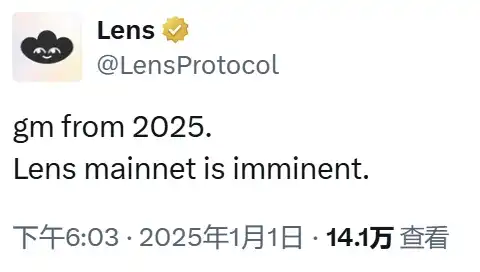
· Launch Date: Official announcement that the mainnet is about to launch, specific date yet to be released.
· Funding Amount: Undisclosed Round - $31 million; Seed Round - $15 million; Undisclosed Round - Undisclosed amount.
· Recent Developments: Apart from the announcement of the upcoming mainnet, there have been no other significant updates.
Orbiter Finance
· Launch Date: Rumored to be in Q1 TGE. On January 14, the official Twitter account posted a long-awaited tweet with the content "20," but it is currently unclear whether it is a countdown or has other significance.
· Funding: Series A - Undisclosed amount, $2 billion valuation; Seed Round - $3.2 million, $40 million valuation.
· Recent Developments: No significant updates.
You may also like

WEEX Deposit/Withdrawal Dynamic Island: Your Asset Status, Always in Sight

Scaling Crypto Derivatives: The Digital Asset Infrastructure Behind High-Volume Trading
In the fast-moving digital asset ecosystem, derivatives platforms face an extreme architectural test. High-leverage futures markets demand more than just standard security—they require absolute operational precision, zero-latency matching engines, and ironclad structural scalability, all while navigating intense market volatility.
As global platforms scale to meet these demands, the industry is shifting away from rigid, monolithic setups toward a more agile, "decoupled" infrastructure philosophy.
The Blueprint for High-Volume Copy TradingFor elite global exchanges like WEEX (founded in 2018), this architectural choice becomes critical when scaling high-volume retail features like social copy trading. When thousands of users automatically mirror the real-time strategies of elite traders simultaneously, it triggers sudden, monumental spikes in concurrent transactional volume.
To prevent execution latency or settlement bottlenecks during these peak volatility events, a platform's primary engine must remain entirely dedicated to risk management, copy-trade synchronization, and order matching.
The Architectural Rule: New-generation platforms must separate front-end user execution engines from heavy backend infrastructural overhead to eliminate operational friction.
By separating these layers, platforms can maintain complete sovereignty over their trading environments and user experiences while strategically aligning with institutional-grade infrastructure ecosystems. This strategic framework allows modern exchanges to leverage advanced Digital Asset Custody infrastructure such as Cobo’s behind the scenes, ensuring that backend wallet management scales elastically alongside trading spikes.
Capitalizing on Market Momentum and 400× LeverageIn a derivatives arena where platforms offer up to 400× leverage on perpetual contracts, capital efficiency and market agility are core business metrics. To capture market momentum, an exchange needs the ability to rapidly expand its asset offerings, supporting everything from legacy crypto assets to sudden, trending altcoins across a massive library of trading pairs.
Adopting a flexible, scalable Wallet-as-a-Service (WaaS) solution such as Cobo’s could completely rewrite the development timeline for high-growth exchanges. Instead of spending months of engineering capital building out custom backend wallet architectures for every new blockchain network, platforms can deploy localized infrastructure in days.
This agility allows platforms to instantly scale their listings to over a thousand trading pairs without compromising security or delaying time-to-market. It mirrors the exact operational advantages seen during high-velocity market events, similar to how advanced wallet infrastructure empowers platforms during sudden asset surges; allowing exchanges to pass that speed and liquidity directly to their global user base.
A Mature Foundation for GrowthThe synergy between trusted infrastructure ecosystems and global trading platforms represents the natural evolution of a maturing crypto market. As WEEX continues to scale its global spot and derivatives offerings for over 6 million users, adopting robust backend paradigms proves that platforms no longer have to compromise between cutting-edge trading velocity and uncompromised structural security.

Morning Report | BitMine increased its holdings by 126,971 ETH last week; trader Eugene announced his exit from the crypto market

Wang Chuan: How can one not feel anxious after the neighbor Old Wang made thirty times profit by investing in storage stocks? (Seven) - A quarter-century cycle

Get Paid to Onboard? Try WEEX’s New Homepage with Rewards for Registration, Deposit & Trade

WEEX Custom Layout: Build Your Perfect Trading Workspace in Seconds

See “Buy Walls” & “Sell Walls” Instantly: WEEX Launches the Depth Chart for Smarter Trades

What Is Quick Trade on WEEX? 2 Ways WEEX Ends Chart-Panel Jumping
Morning News | Five major virtual asset platforms in South Korea have experienced 57 incidents of hacking and system failures in six years; Grayscale submits registration application for Canton ETF

Should we escape the peak? The principle of the tail-end market in the stock market

RootData: May 2026 Cryptocurrency Exchange Transparency Research Report

Founder of Baixing.com: My Experience with Claude Code in Fourteen Points

Yang Ge Gary: Agent Economics and AI Microeconomics
When reasoning becomes a scarce resource, who captures its value?

Jensen Huang dramatically "rescues" the South Korean stock market

Stablecoins vs Deposit Tokens: On the surface, they seem like opposing sides, but in reality, they are interconnected

Bitcoin Crash to $50,000 or Bear Trap Before $100,000? Deep Dive for WEEX Traders
How Could the SpaceX IPO Affect Bitcoin, Altcoins season, and Crypto Liquidity?
WEEX Deposit/Withdrawal Dynamic Island: Your Asset Status, Always in Sight
Scaling Crypto Derivatives: The Digital Asset Infrastructure Behind High-Volume Trading
In the fast-moving digital asset ecosystem, derivatives platforms face an extreme architectural test. High-leverage futures markets demand more than just standard security—they require absolute operational precision, zero-latency matching engines, and ironclad structural scalability, all while navigating intense market volatility.
As global platforms scale to meet these demands, the industry is shifting away from rigid, monolithic setups toward a more agile, "decoupled" infrastructure philosophy.
The Blueprint for High-Volume Copy TradingFor elite global exchanges like WEEX (founded in 2018), this architectural choice becomes critical when scaling high-volume retail features like social copy trading. When thousands of users automatically mirror the real-time strategies of elite traders simultaneously, it triggers sudden, monumental spikes in concurrent transactional volume.
To prevent execution latency or settlement bottlenecks during these peak volatility events, a platform's primary engine must remain entirely dedicated to risk management, copy-trade synchronization, and order matching.
The Architectural Rule: New-generation platforms must separate front-end user execution engines from heavy backend infrastructural overhead to eliminate operational friction.
By separating these layers, platforms can maintain complete sovereignty over their trading environments and user experiences while strategically aligning with institutional-grade infrastructure ecosystems. This strategic framework allows modern exchanges to leverage advanced Digital Asset Custody infrastructure such as Cobo’s behind the scenes, ensuring that backend wallet management scales elastically alongside trading spikes.
Capitalizing on Market Momentum and 400× LeverageIn a derivatives arena where platforms offer up to 400× leverage on perpetual contracts, capital efficiency and market agility are core business metrics. To capture market momentum, an exchange needs the ability to rapidly expand its asset offerings, supporting everything from legacy crypto assets to sudden, trending altcoins across a massive library of trading pairs.
Adopting a flexible, scalable Wallet-as-a-Service (WaaS) solution such as Cobo’s could completely rewrite the development timeline for high-growth exchanges. Instead of spending months of engineering capital building out custom backend wallet architectures for every new blockchain network, platforms can deploy localized infrastructure in days.
This agility allows platforms to instantly scale their listings to over a thousand trading pairs without compromising security or delaying time-to-market. It mirrors the exact operational advantages seen during high-velocity market events, similar to how advanced wallet infrastructure empowers platforms during sudden asset surges; allowing exchanges to pass that speed and liquidity directly to their global user base.
A Mature Foundation for GrowthThe synergy between trusted infrastructure ecosystems and global trading platforms represents the natural evolution of a maturing crypto market. As WEEX continues to scale its global spot and derivatives offerings for over 6 million users, adopting robust backend paradigms proves that platforms no longer have to compromise between cutting-edge trading velocity and uncompromised structural security.
Morning Report | BitMine increased its holdings by 126,971 ETH last week; trader Eugene announced his exit from the crypto market
Wang Chuan: How can one not feel anxious after the neighbor Old Wang made thirty times profit by investing in storage stocks? (Seven) - A quarter-century cycle
Get Paid to Onboard? Try WEEX’s New Homepage with Rewards for Registration, Deposit & Trade
WEEX Custom Layout: Build Your Perfect Trading Workspace in Seconds


