
The AI Agent is back online. What are some new projects worth keeping an eye on from the past week?


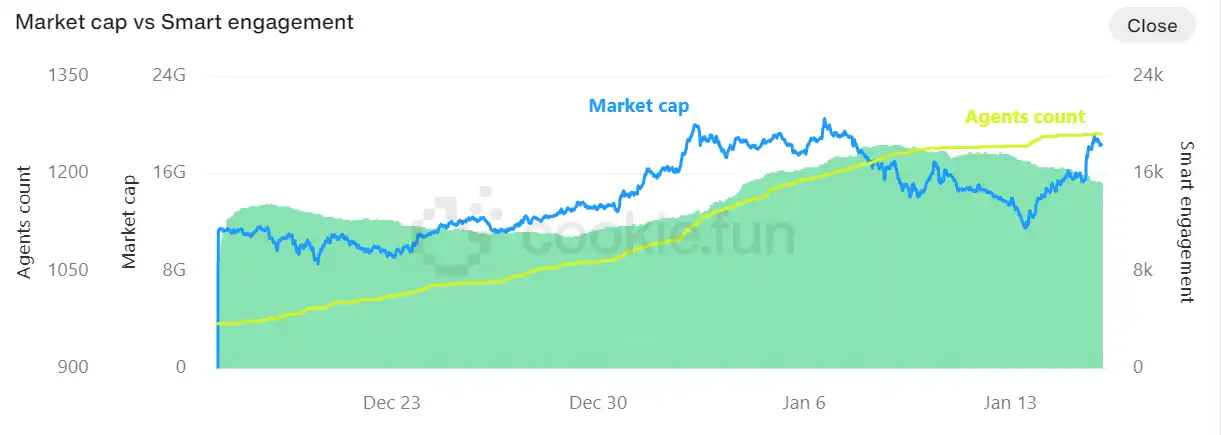
In the past few days, due to the reduced expectation of a Fed rate cut, the US stock market was hit hard, with a significant decline in the overall market. On the 13th, Bitcoin briefly fell below $90,000. The AI Agent sector also experienced a certain degree of decline in popularity, with tokens such as Buzz, ai16z, ARC, and zerebro seeing a staggering drop of around 50%. According to cookie.fun data, the market capitalization of the AI Agent sector dropped from $19 billion on the 6th to a low of around $11.5 billion on the 13th, and has now rebounded to nearly $18.4 billion. This series of changes undoubtedly poured cold water on the previously hot market.
However, Bitcoin quickly recovered, bouncing back to around $98,000 on the 14th, leading to a recovery in market sentiment. In this rebound, the AIOS and SORA tokens, two AI agent projects, stood out. AIOS is dedicated to developing an Artificial Intelligence Agent Operating System, while SORA aims to develop a modular AI framework in Go language, becoming representative forces in the AI agent sector's recovery. In this market warming, aside from major projects leading the rally, AI Agent series tokens also gained vitality due to the emergence of new projects. This article highlights three emerging AI Agent projects that have garnered high market attention recently: AICC, AIOS, and SORA. These projects are all from the Solana ecosystem and have quickly attracted significant funding and participation post-launch, resulting in a substantial increase in market capitalization.
AIOS: The Artificial Intelligence Agent Operating System Embracing FOMO and FUD
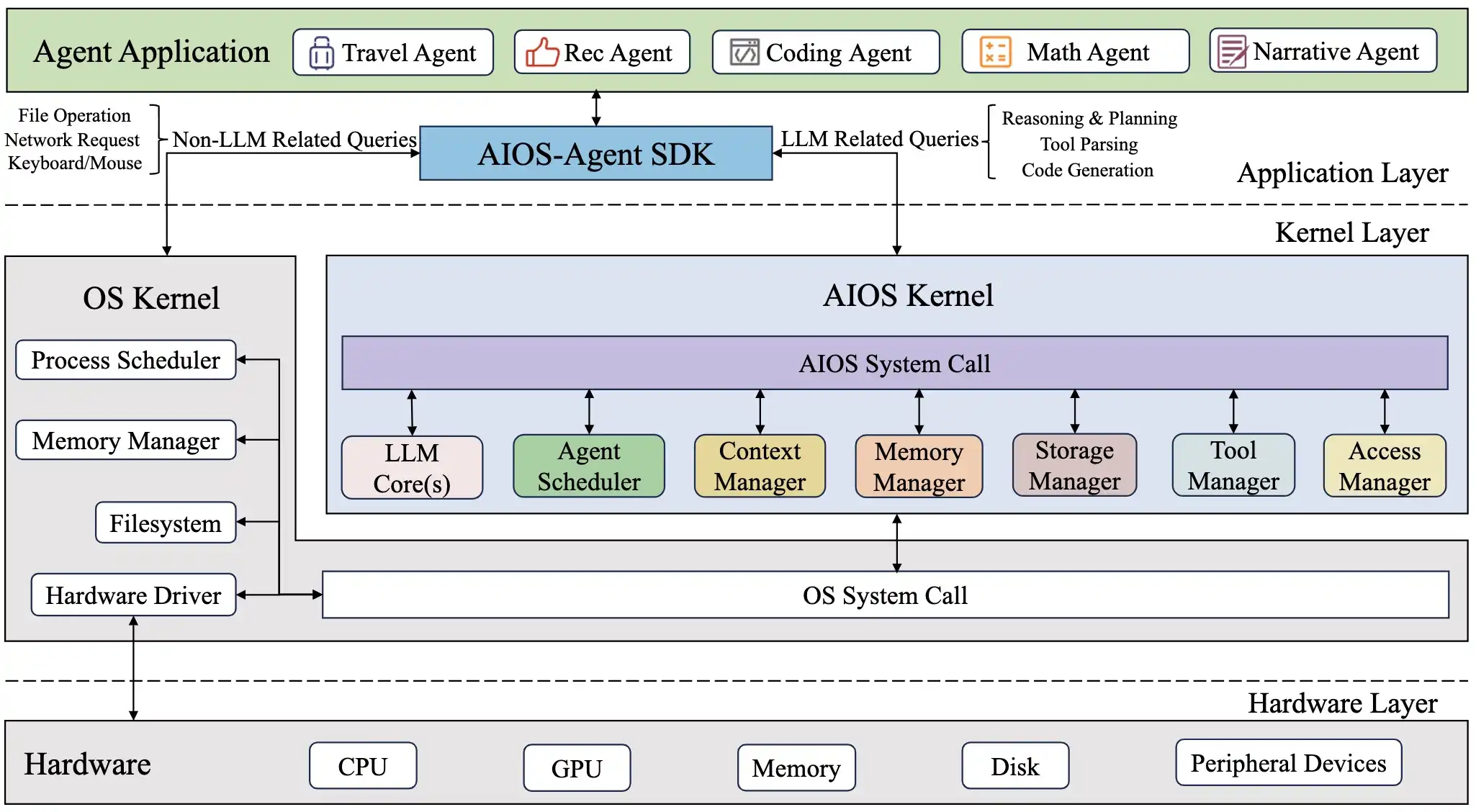
AIOS is an Artificial Intelligence Agent Operating System that embeds Large Language Models (LLMs) into the operating system, facilitating the development and deployment of AI agents based on LLMs. AIOS aims to address the challenges faced by LLM-based agents in the development and deployment process (such as scheduling, context switching, memory management, storage management, tool management, and agent SDK management), providing a better AIOS-Agent ecosystem for agent developers and users. AIOS consists of the AIOS kernel and AIOS SDK (Mind), supporting both Web UI and terminal UI.
AIOS has broad commercial prospects, aiming to build an operating system and ecosystem for LLM agents, providing a unified interface for LLMs and tools that can be applied in AI agent development, cross-model collaboration, AGI research and development, and other scenarios. The core advantage of AIOS is that it offers a unified interface that simplifies the integration and management of various LLMs and tools, solving the complex problems in LLM agent development and deployment, significantly reducing the technological threshold for developing and deploying intelligent agents.
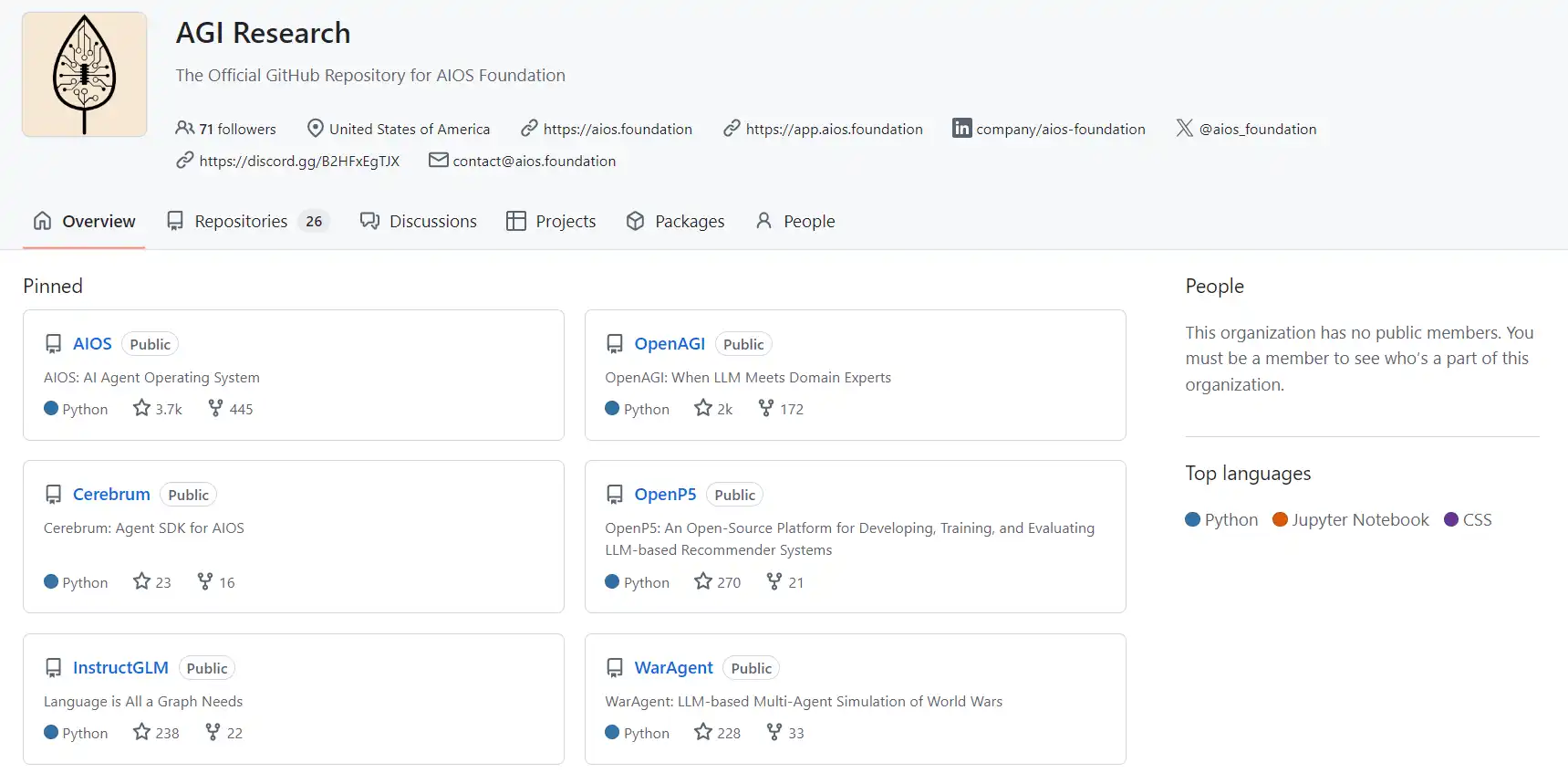
Furthermore, AIOS is not just a project team's "pie in the sky," but a product-level AI agent operating system that has received over 3700 stars on GitHub, indicating high recognition.
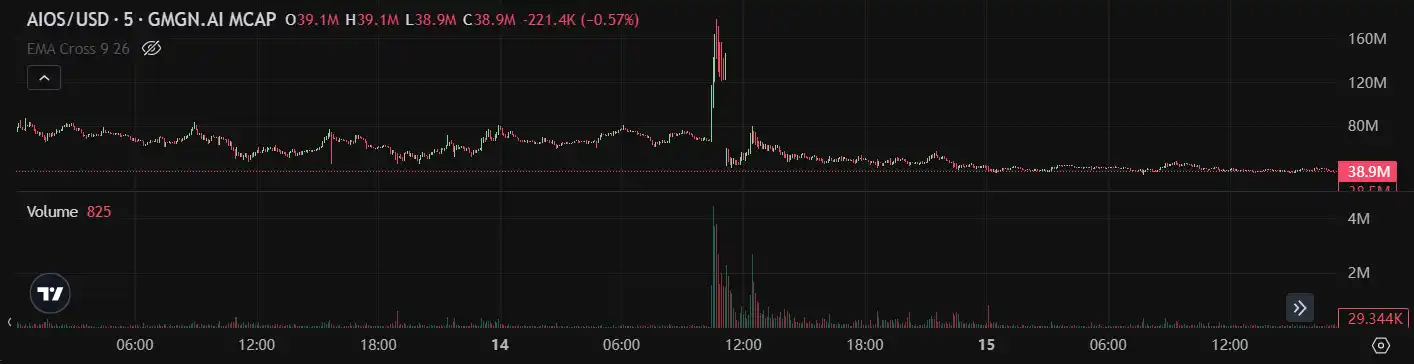
On January 14th, the AIOS Foundation announced that it would burn the held tokens within 24 hours, totaling 66.61% of the total supply (comprising 64.03% and 2.58%, respectively). In the future, as the AIOS Chain mainnet launches, circulating AIOS on Solana can choose to migrate to AIOSChain. Simultaneously, AIOSChain will mint and burn a proportional amount of native tokens and permanently lock them for staking to support decentralized ecosystem development.
Spurred by this news, AIOS experienced a short-term surge of over 150%, reaching a market cap of $170 million. Its current market cap is around $40 million.
However, the voices casting doubt on the AIOS token have never ceased. From the project team mentioning on Discord that a Twitter hack led to a crash, Chinese wash trading, 13 rebranding attempts, to questioning the narrative's meaningfulness, AIOS has emerged from among many tokens with both fervent support and skepticism, only to quickly fall back.
SORA: An AI Dialogue Framework Developed in Go
Another rising star is the project Sora. Sora Labs is an AI company focused on blockchain products, committed to making AI accessible to everyone, from individual developers to large organizations, and making it practical. By providing powerful tools and frameworks to simplify AI development, anyone can use these tools and frameworks to create, launch, and scale intelligent systems in real-world scenarios. Its main products are all open source on GitHub:
1. Zen (main product): An open source AI dialogue framework built in Go, designed to create a powerful and easy-to-build system, alongside $swarms as an AI agent framework.
2. Hana: A Twitter AI agent based on the Zen framework.
3. Toolkit: Developed using Go and Rust, designed to help in developing and managing tools that seamlessly collaborate with AI models.
4. Solana Toolkit: The Solana Toolkit extends the basic Toolkit implementation to provide Solana-specific functionality.
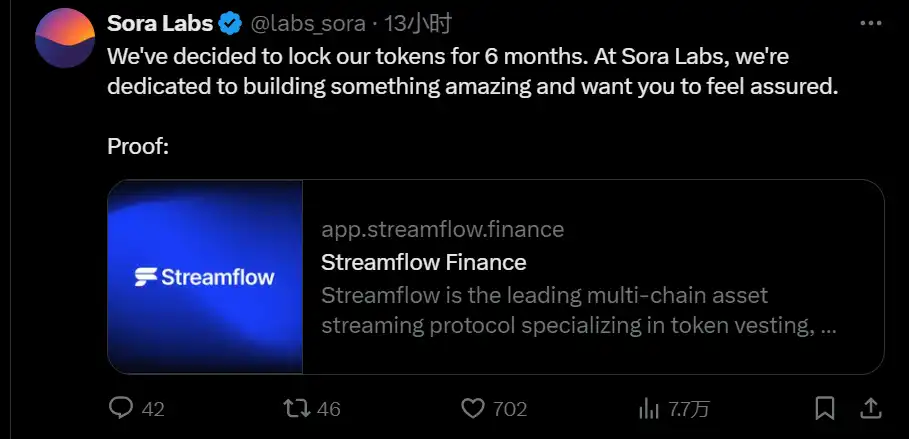
The project team also announced that the held tokens will be locked for 6 months.
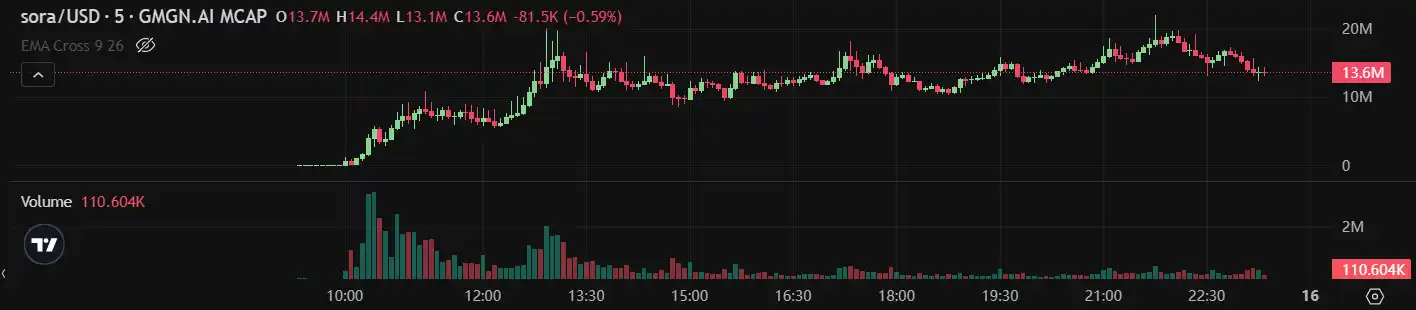
Upon the launch of the Sora token, the market value quickly reached 19M within 2 hours, with a 24-hour trading volume soaring to 75M. Subsequently, the market value has fluctuated above 10M.
AICC: From Stellar Rise to Fall from Grace of an AI DAO
AICC is a typical token that saw a high opening price followed by a downward trend. Within 3 days, it transitioned from a shining star to a luxury project to a condemned "VC coin."
AiccelerateDAO is an investment and development DAO focused on accelerating decentralized open-source AI development. The development advisory list includes Shaw, the founder of ai16z; EtherMage, a core contributor to Virtuals Protocol; Nader Dabit, Developer Relations Lead at EigenLayer; and Jason Zhao, co-founder of Story Protocol.
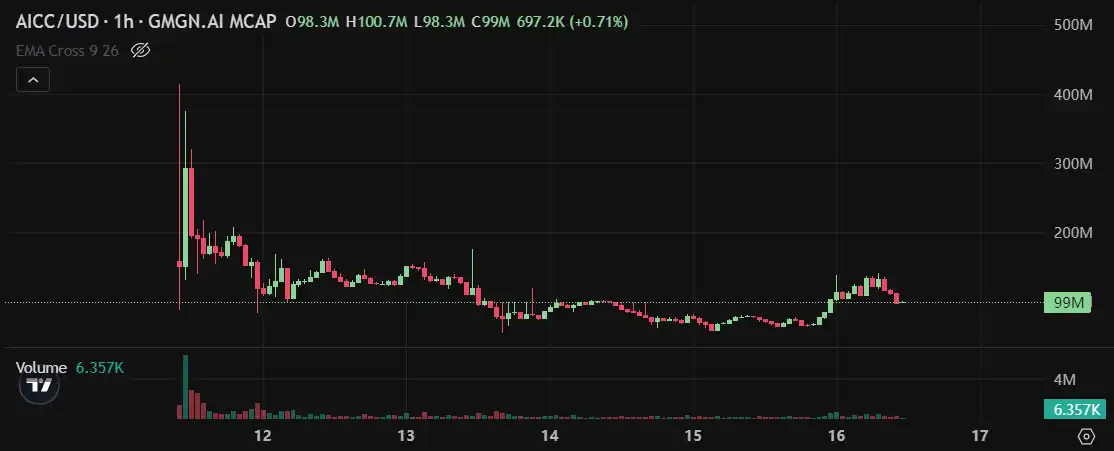
After AICC officially started trading on-chain, its market value surged to over 4 billion dollars. Following a price drop, it once again surpassed 3.7 billion dollars within an hour, becoming another "AI sector skyrocket." However, participants of AiccelerateDAO quickly sold off tokens for significant profits after the project launch, rapidly shifting the market's focus to the critical issue of token distribution structure. This sparked extensive discussion and controversy in the community, drawing attention to the tokenomics and responsibility of AICC, its project team, and investors. Consequently, the price of the AICC token plummeted, reaching a market value as low as around 50 million dollars, nearly an 80% drop from its previous peak of 3.7 billion dollars.
You may also like

WEEX Deposit/Withdrawal Dynamic Island: Your Asset Status, Always in Sight

Scaling Crypto Derivatives: The Digital Asset Infrastructure Behind High-Volume Trading
In the fast-moving digital asset ecosystem, derivatives platforms face an extreme architectural test. High-leverage futures markets demand more than just standard security—they require absolute operational precision, zero-latency matching engines, and ironclad structural scalability, all while navigating intense market volatility.
As global platforms scale to meet these demands, the industry is shifting away from rigid, monolithic setups toward a more agile, "decoupled" infrastructure philosophy.
The Blueprint for High-Volume Copy TradingFor elite global exchanges like WEEX (founded in 2018), this architectural choice becomes critical when scaling high-volume retail features like social copy trading. When thousands of users automatically mirror the real-time strategies of elite traders simultaneously, it triggers sudden, monumental spikes in concurrent transactional volume.
To prevent execution latency or settlement bottlenecks during these peak volatility events, a platform's primary engine must remain entirely dedicated to risk management, copy-trade synchronization, and order matching.
The Architectural Rule: New-generation platforms must separate front-end user execution engines from heavy backend infrastructural overhead to eliminate operational friction.
By separating these layers, platforms can maintain complete sovereignty over their trading environments and user experiences while strategically aligning with institutional-grade infrastructure ecosystems. This strategic framework allows modern exchanges to leverage advanced Digital Asset Custody infrastructure such as Cobo’s behind the scenes, ensuring that backend wallet management scales elastically alongside trading spikes.
Capitalizing on Market Momentum and 400× LeverageIn a derivatives arena where platforms offer up to 400× leverage on perpetual contracts, capital efficiency and market agility are core business metrics. To capture market momentum, an exchange needs the ability to rapidly expand its asset offerings, supporting everything from legacy crypto assets to sudden, trending altcoins across a massive library of trading pairs.
Adopting a flexible, scalable Wallet-as-a-Service (WaaS) solution such as Cobo’s could completely rewrite the development timeline for high-growth exchanges. Instead of spending months of engineering capital building out custom backend wallet architectures for every new blockchain network, platforms can deploy localized infrastructure in days.
This agility allows platforms to instantly scale their listings to over a thousand trading pairs without compromising security or delaying time-to-market. It mirrors the exact operational advantages seen during high-velocity market events, similar to how advanced wallet infrastructure empowers platforms during sudden asset surges; allowing exchanges to pass that speed and liquidity directly to their global user base.
A Mature Foundation for GrowthThe synergy between trusted infrastructure ecosystems and global trading platforms represents the natural evolution of a maturing crypto market. As WEEX continues to scale its global spot and derivatives offerings for over 6 million users, adopting robust backend paradigms proves that platforms no longer have to compromise between cutting-edge trading velocity and uncompromised structural security.

Morning Report | BitMine increased its holdings by 126,971 ETH last week; trader Eugene announced his exit from the crypto market

Wang Chuan: How can one not feel anxious after the neighbor Old Wang made thirty times profit by investing in storage stocks? (Seven) - A quarter-century cycle

Get Paid to Onboard? Try WEEX’s New Homepage with Rewards for Registration, Deposit & Trade

WEEX Custom Layout: Build Your Perfect Trading Workspace in Seconds

See “Buy Walls” & “Sell Walls” Instantly: WEEX Launches the Depth Chart for Smarter Trades

What Is Quick Trade on WEEX? 2 Ways WEEX Ends Chart-Panel Jumping
Morning News | Five major virtual asset platforms in South Korea have experienced 57 incidents of hacking and system failures in six years; Grayscale submits registration application for Canton ETF

Should we escape the peak? The principle of the tail-end market in the stock market

RootData: May 2026 Cryptocurrency Exchange Transparency Research Report

Founder of Baixing.com: My Experience with Claude Code in Fourteen Points

Yang Ge Gary: Agent Economics and AI Microeconomics
When reasoning becomes a scarce resource, who captures its value?

Jensen Huang dramatically "rescues" the South Korean stock market

Stablecoins vs Deposit Tokens: On the surface, they seem like opposing sides, but in reality, they are interconnected

Bitcoin Crash to $50,000 or Bear Trap Before $100,000? Deep Dive for WEEX Traders
How Could the SpaceX IPO Affect Bitcoin, Altcoins season, and Crypto Liquidity?
WEEX Deposit/Withdrawal Dynamic Island: Your Asset Status, Always in Sight
Scaling Crypto Derivatives: The Digital Asset Infrastructure Behind High-Volume Trading
In the fast-moving digital asset ecosystem, derivatives platforms face an extreme architectural test. High-leverage futures markets demand more than just standard security—they require absolute operational precision, zero-latency matching engines, and ironclad structural scalability, all while navigating intense market volatility.
As global platforms scale to meet these demands, the industry is shifting away from rigid, monolithic setups toward a more agile, "decoupled" infrastructure philosophy.
The Blueprint for High-Volume Copy TradingFor elite global exchanges like WEEX (founded in 2018), this architectural choice becomes critical when scaling high-volume retail features like social copy trading. When thousands of users automatically mirror the real-time strategies of elite traders simultaneously, it triggers sudden, monumental spikes in concurrent transactional volume.
To prevent execution latency or settlement bottlenecks during these peak volatility events, a platform's primary engine must remain entirely dedicated to risk management, copy-trade synchronization, and order matching.
The Architectural Rule: New-generation platforms must separate front-end user execution engines from heavy backend infrastructural overhead to eliminate operational friction.
By separating these layers, platforms can maintain complete sovereignty over their trading environments and user experiences while strategically aligning with institutional-grade infrastructure ecosystems. This strategic framework allows modern exchanges to leverage advanced Digital Asset Custody infrastructure such as Cobo’s behind the scenes, ensuring that backend wallet management scales elastically alongside trading spikes.
Capitalizing on Market Momentum and 400× LeverageIn a derivatives arena where platforms offer up to 400× leverage on perpetual contracts, capital efficiency and market agility are core business metrics. To capture market momentum, an exchange needs the ability to rapidly expand its asset offerings, supporting everything from legacy crypto assets to sudden, trending altcoins across a massive library of trading pairs.
Adopting a flexible, scalable Wallet-as-a-Service (WaaS) solution such as Cobo’s could completely rewrite the development timeline for high-growth exchanges. Instead of spending months of engineering capital building out custom backend wallet architectures for every new blockchain network, platforms can deploy localized infrastructure in days.
This agility allows platforms to instantly scale their listings to over a thousand trading pairs without compromising security or delaying time-to-market. It mirrors the exact operational advantages seen during high-velocity market events, similar to how advanced wallet infrastructure empowers platforms during sudden asset surges; allowing exchanges to pass that speed and liquidity directly to their global user base.
A Mature Foundation for GrowthThe synergy between trusted infrastructure ecosystems and global trading platforms represents the natural evolution of a maturing crypto market. As WEEX continues to scale its global spot and derivatives offerings for over 6 million users, adopting robust backend paradigms proves that platforms no longer have to compromise between cutting-edge trading velocity and uncompromised structural security.
Morning Report | BitMine increased its holdings by 126,971 ETH last week; trader Eugene announced his exit from the crypto market
Wang Chuan: How can one not feel anxious after the neighbor Old Wang made thirty times profit by investing in storage stocks? (Seven) - A quarter-century cycle
Get Paid to Onboard? Try WEEX’s New Homepage with Rewards for Registration, Deposit & Trade
WEEX Custom Layout: Build Your Perfect Trading Workspace in Seconds


