
The Person Who Made $69 Million with NFTs Four Years Ago Is Still Making Money





beeple, the man who sold a single NFT for a record-breaking $69 million, has always been seen as a symbol of the NFT golden age that once was.

Despite the fading glory of NFTs, beeple and his team have remained active in the NFT community. At this year's Basel Art Fair, he once again brought a "Golden Dog" — Regular Animals — to the currently lackluster NFT market.
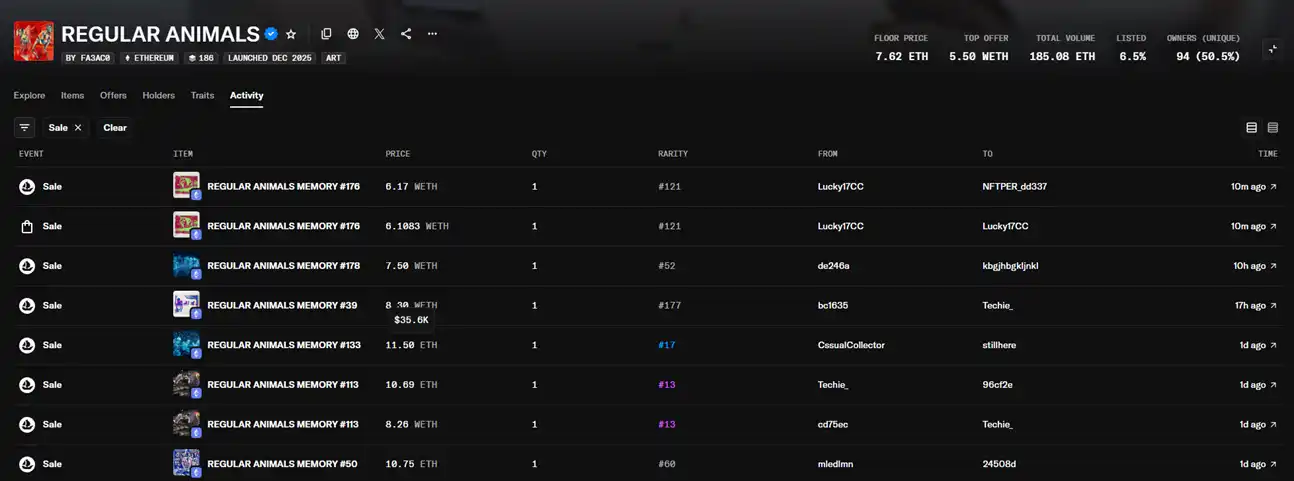
Yesterday, multiple pieces of Regular Animals were sold on OpenSea for over 10 ETH (around $35,000) each, even though this artwork was originally given out for free at the Basel Art Fair, with a total of 256 pieces distributed. By this calculation, beeple gave away NFTs worth millions of dollars at the Basel Art Fair.
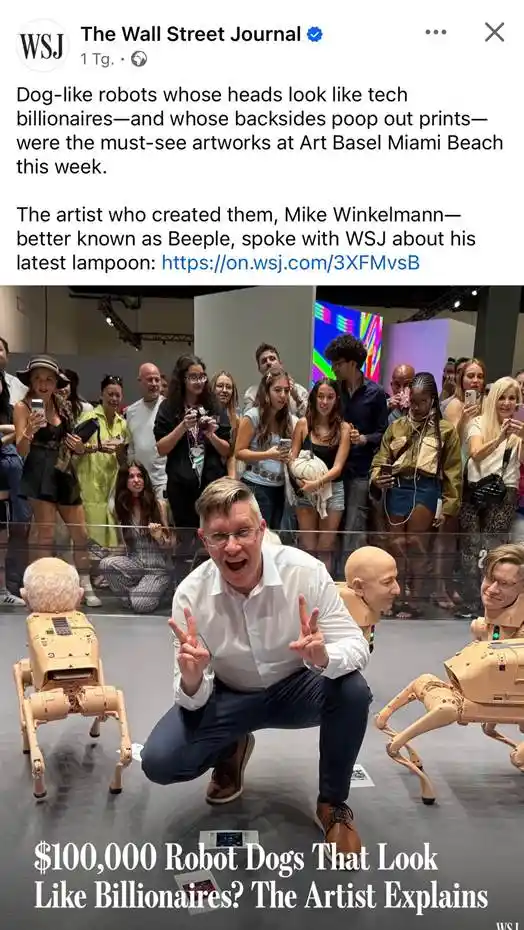
For the Basel Art Fair project, beeple and his team presented Regular Animals, a collection of "regular animals." These are a bunch of robotic dogs, as shown in the image below, with somewhat eerie human faces resembling well-known personalities such as Musk, Andy Warhol, Zuckerberg, Picasso, and even beeple himself.
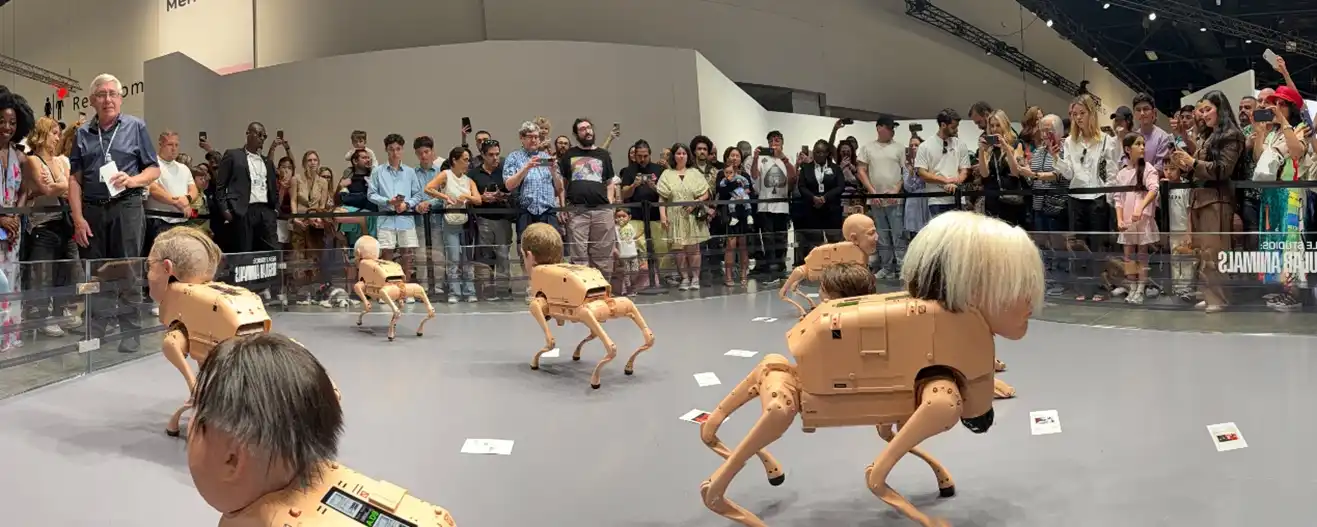
However, the visual effect of these somewhat eerie robotic dogs is not the only feature; these robotic dogs observe their surroundings through cameras in their heads and use a continuously evolving visual algorithmic logic to create art.
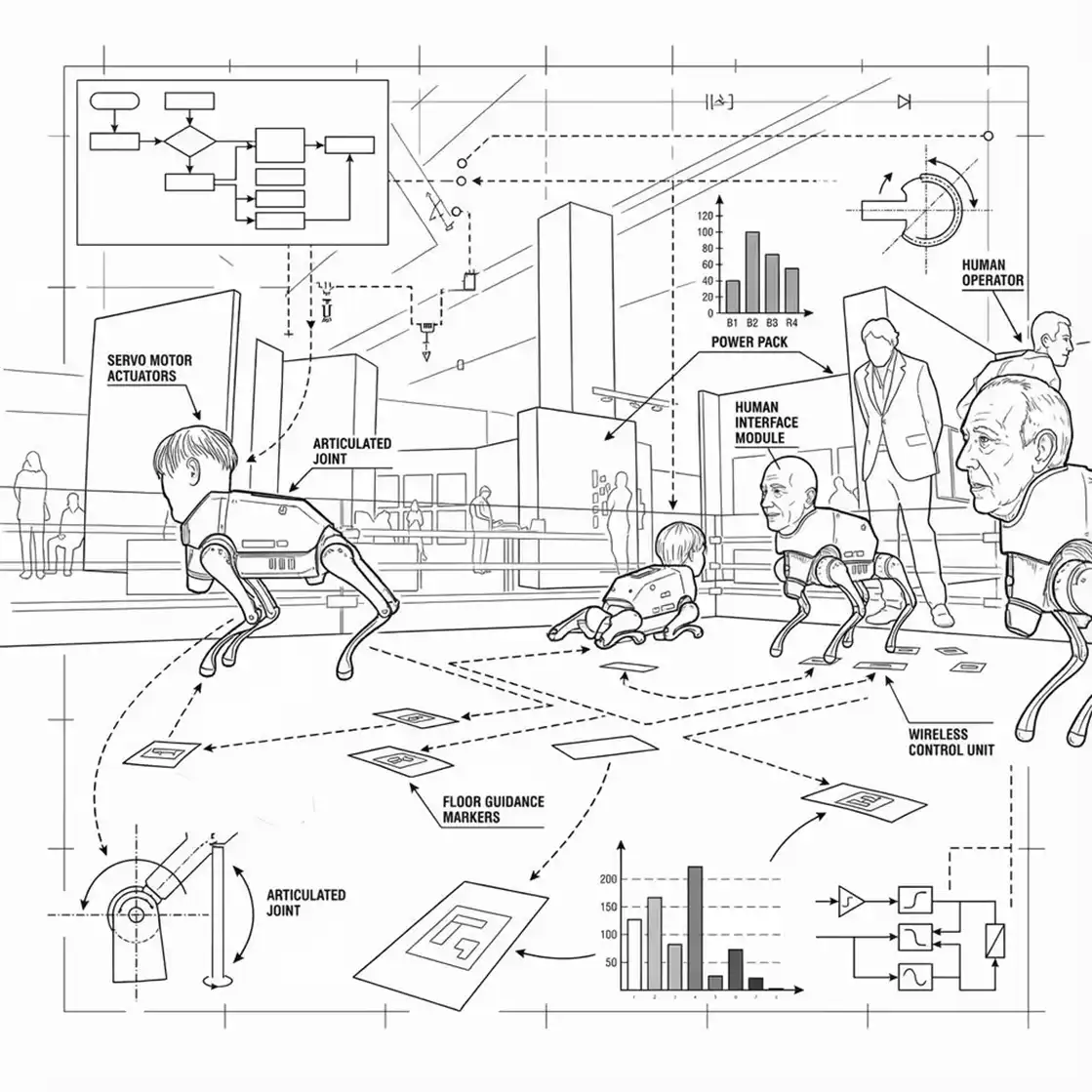
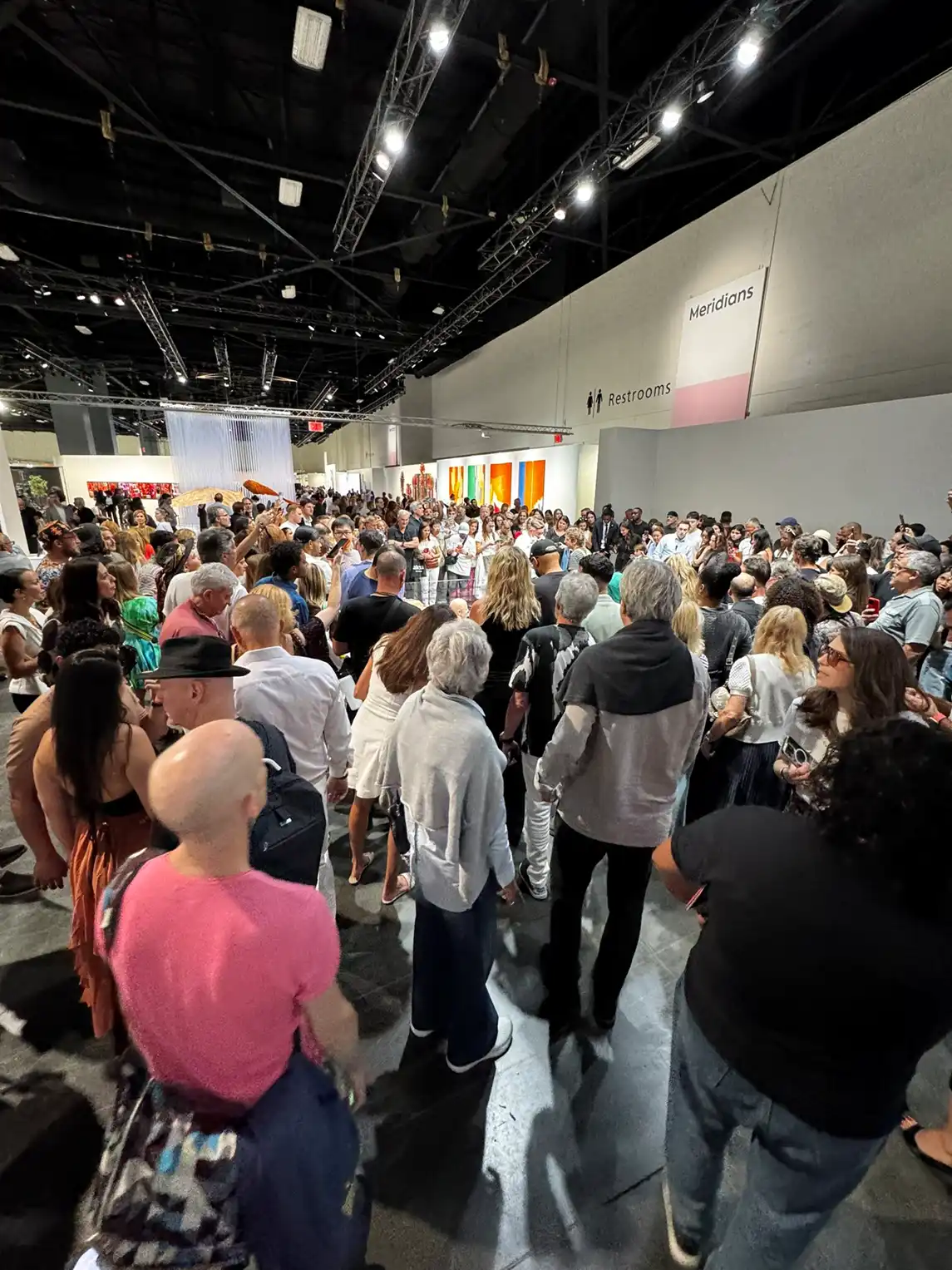
The selection of these celebrity personas embodied by the robotic dogs is not arbitrary. These personalities were chosen because they have influenced the way humans perceive the world, whether through algorithms, art, or politics. As humans, we view the world through these perspectives, and so do these robotic dogs. At the Basel Art Fair, these robotic dogs and humans observe each other, and each moment of observation becomes an artwork created by these robotic dogs, which serve as their autobiographies.
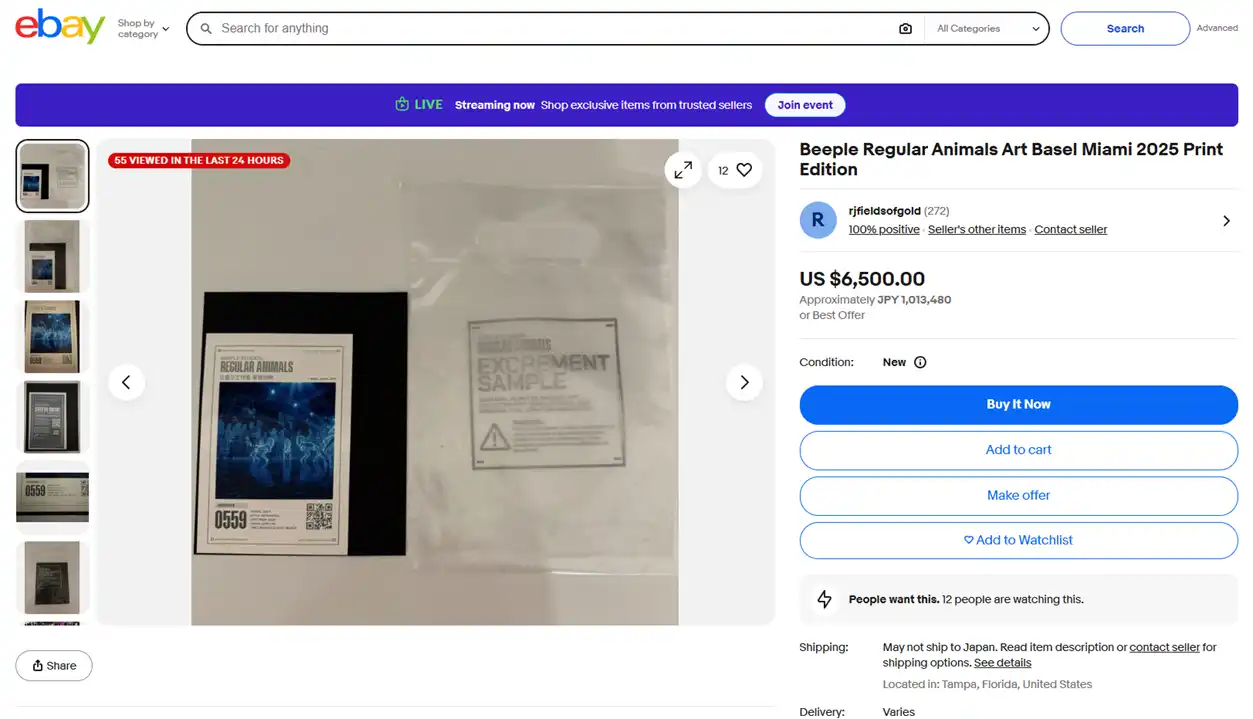
Interestingly, Regular Animas also has a physical series, totaling 1024 pieces. On eBay, someone has already listed it for a fixed price of $6500. The market pricing suggests that the NFT is far more valuable than the physical artwork, reminiscent of Damien Hirst's "The Currency" series from years ago, forcing owners to choose between physical and NFT.
Before achieving great success in the NFT space, beeple had been creating art every day since 2007, with none selling for over $100. After gaining fame and fortune, beeple did not splurge like some artists or crypto project founders. Instead, he acquired a roughly 460-square-meter studio/gallery, assembled a team of dozens of 3D artists, engineers, and researchers (including a former Boeing engineer), invited Carolyn Christov-Bakargiev, former director of the Castello di Rivoli contemporary art museum, as an advisor, continuously exhibited his work at art shows around the world, and created new art pieces.
Beeple's recent exhibition featuring robotic dogs has garnered attention not only in the crypto community due to its prices but also received coverage from traditional media outlets like the WSJ.
You may also like

The foundation of SpaceX's trillion-dollar valuation: Who is dividing Musk's annual capital expenditure of tens of billions?

France vs Senegal World Cup 2026: Mbappe’s New Era Begins Against a Historic Rival

SharpLink CEO: How to understand that Ethereum developers have just surpassed 1 million?

Morning Report | MiCA grace period expires on July 1; Kalshi's trading volume in the first week of the World Cup breaks $5.1 billion, setting a record

What is the connection between Huang Zheng of Pinduoduo and blockchain?

Morning Report | Prediction market platforms like Kalshi and Polymarket jointly sue Kentucky over 14.25% trading tax; Bridgewater founder discusses decision-making in the AI era: principled thinking should run parallel to AI, human insight remains irre...

If the AI bubble has already burst, who will truly remain?
Paul Graham: How to Make a Billion Dollars

After 18 years, blockchain has finally started to head towards the main channel
Claude enforces "facial recognition for household registration," starting in July, no ID card means no access?

On the day of SpaceX's IPO, the first real test of the three perpetual mechanisms

Value Distribution of Stablecoins
Galaxy Deep Dive: Is the Bitcoin Four-Year Cycle Still Valid?

SpaceX IPO, Nvidia, and Bitcoin: Why Traders Are Watching More Than Just Crypto in 2026

The other side of Musk's trillion-dollar fortune: 85% cannot be sold

The U.S. government prohibits foreigners from using Fable 5, Anthropic issues a rebuttal

Citibank releases "2030 Asset Tokenization Market Outlook": 6 major trends may create a $8.2 trillion market
The trillion-dollar valuation test: Are the three major super IPOs a celebration for tech stocks or a nightmare for the crypto market?
The foundation of SpaceX's trillion-dollar valuation: Who is dividing Musk's annual capital expenditure of tens of billions?
France vs Senegal World Cup 2026: Mbappe’s New Era Begins Against a Historic Rival
SharpLink CEO: How to understand that Ethereum developers have just surpassed 1 million?
Morning Report | MiCA grace period expires on July 1; Kalshi's trading volume in the first week of the World Cup breaks $5.1 billion, setting a record
What is the connection between Huang Zheng of Pinduoduo and blockchain?
Morning Report | Prediction market platforms like Kalshi and Polymarket jointly sue Kentucky over 14.25% trading tax; Bridgewater founder discusses decision-making in the AI era: principled thinking should run parallel to AI, human insight remains irre...


